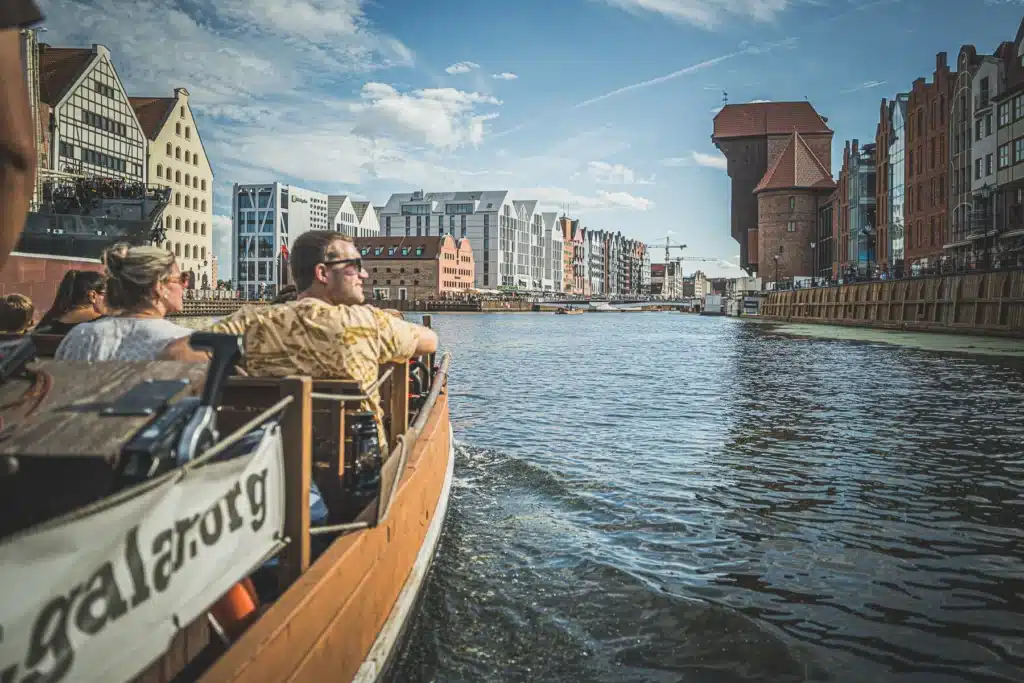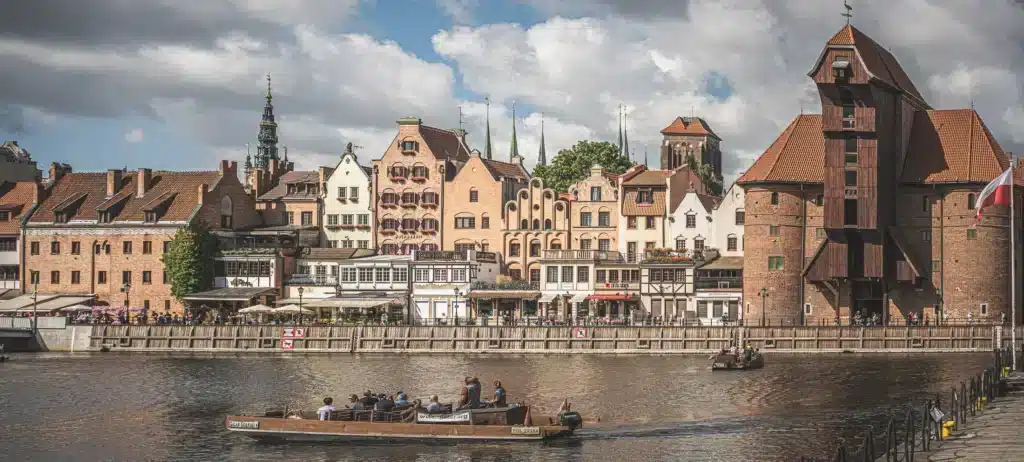


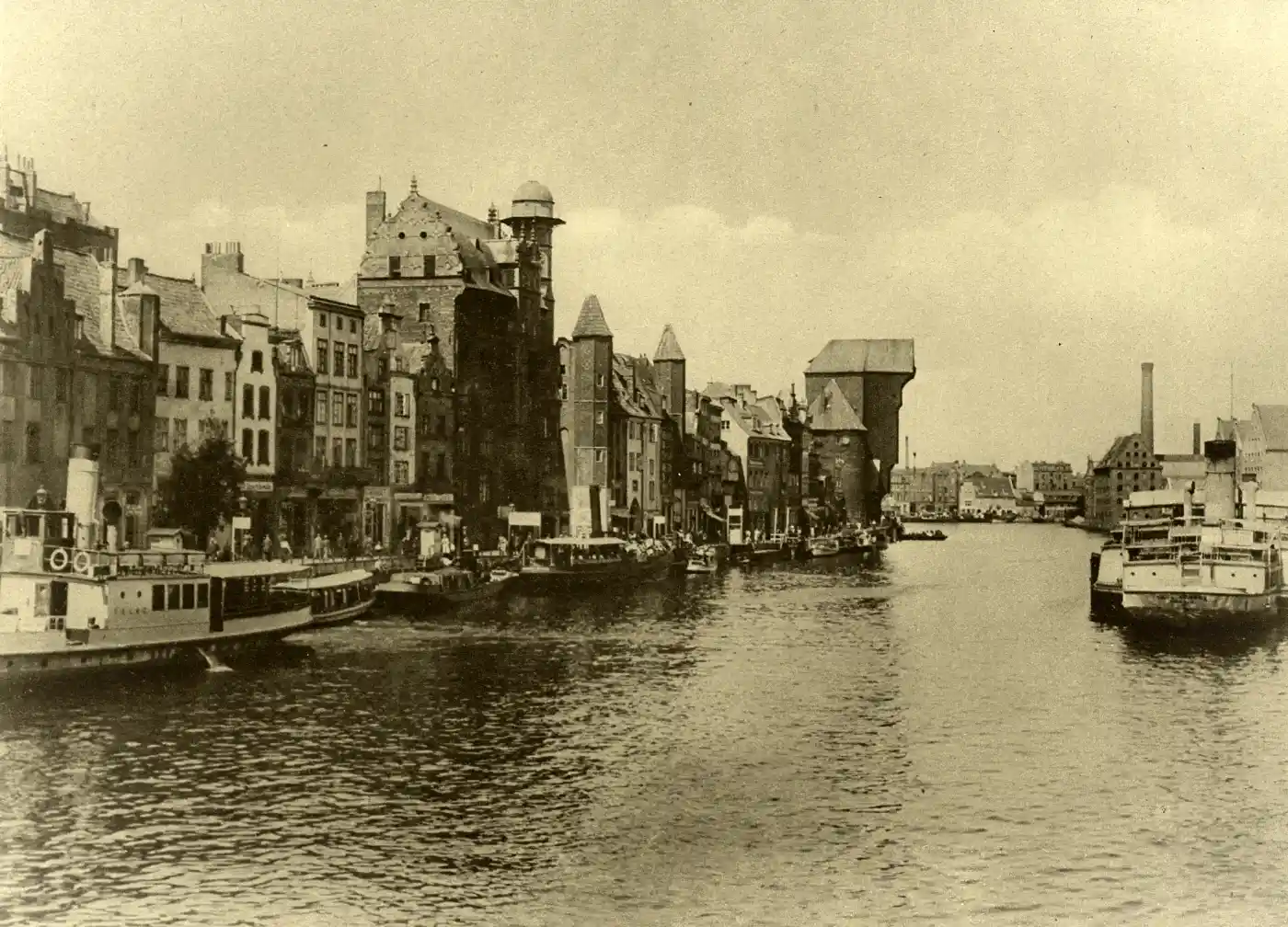

Next to the wooden silhouette of the Crane stands a building of a completely different character: brick-built, glazed, with a roofline reminiscent of the tenement houses along the Motława. The Maritime Culture Centre is the contemporary part of the museum waterfront, but the history of the site it occupies goes back much further.
The former quay by the Crane
Archival views show this area as part of a working port. The proximity of the crane, warehouses and vessels on the Motława River stemmed from the day-to-day needs of cargo handling. The water was the route for deliveries, and the waterfront was the place where cargo met the city.
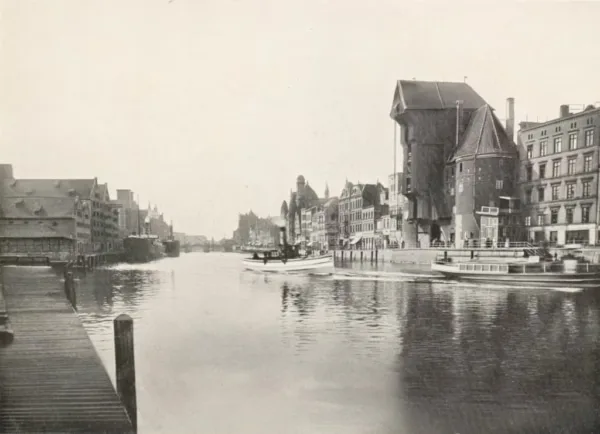
To imagine the former function of this space, it is worth looking at the details: boats by the shore, warehouse openings, jetties and the short distance between the buildings and the water. This setting explains why a centre dedicated to maritime culture was later established here.
From a post-war boiler house to a museum
War damage altered the built environment of this part of the city. After the war, a boiler house operated in the vicinity of the Crane. The building, known as the Colonial Warehouse, was incorporated into what was then the Central Maritime Museum in 1977.
At the start of the 21st century, a decision was made to construct a new building. The work was preceded by archaeological excavations, during which artefacts relating to the city’s past were discovered. In April 2012, the Maritime Culture Centre was opened; it is now part of the National Maritime Museum.
How can we talk about working at sea?
The Centre uses interactive displays to explain issues related to shipping. The ‘People–Ships–Ports’ exhibition allows visitors to learn about, amongst other things, the steering of vessels, cargo handling and phenomena occurring at sea. Topics familiar from the port environment can be explored here in action.
Another important part of the collection is ‘Boats of the World’s Peoples’. This collection of vessels from different cultures shows how varied solutions were developed in response to the conditions of local rivers, lakes and seas. The shape of the boats was determined by the materials available, the type of cargo carried and the method of propulsion.
The new building: continuity of the narrative
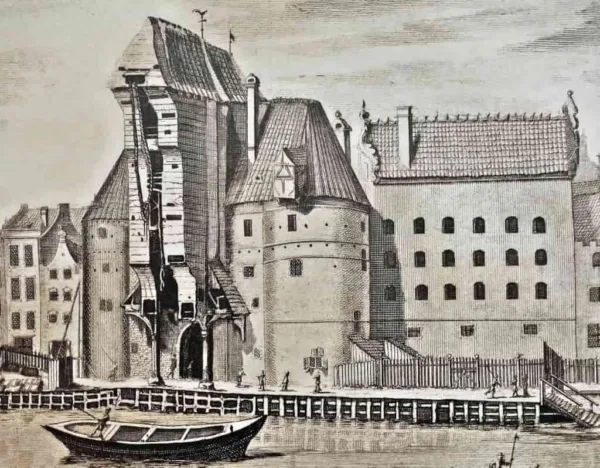
The historical illustrations in this post do not feature the Centre as it stands today. They depict the former surroundings of the Crane and a site that has, over time, changed its purpose. This distinction is important: the modern institution tells the story of heritage, but is not itself a medieval monument.
It is worth visiting the centre in conjunction with the neighbouring Żuraw. The former crane demonstrates a specific technical solution, whilst the museum’s exhibitions help visitors to understand the wider world of ships, ports and people. The National Maritime Museum publishes the current programme of guided tours.