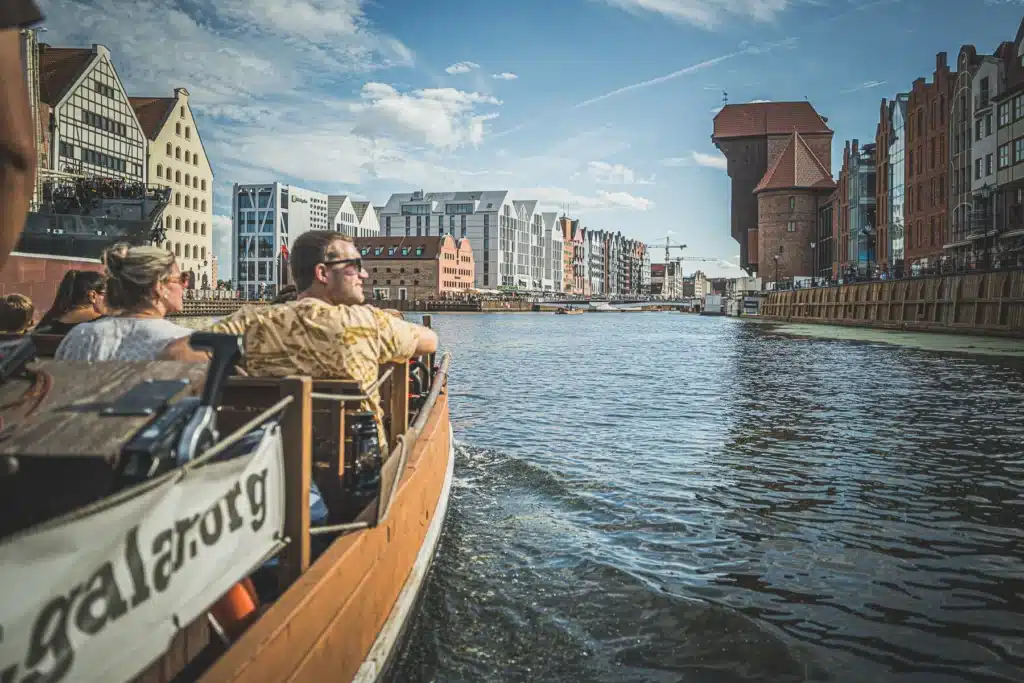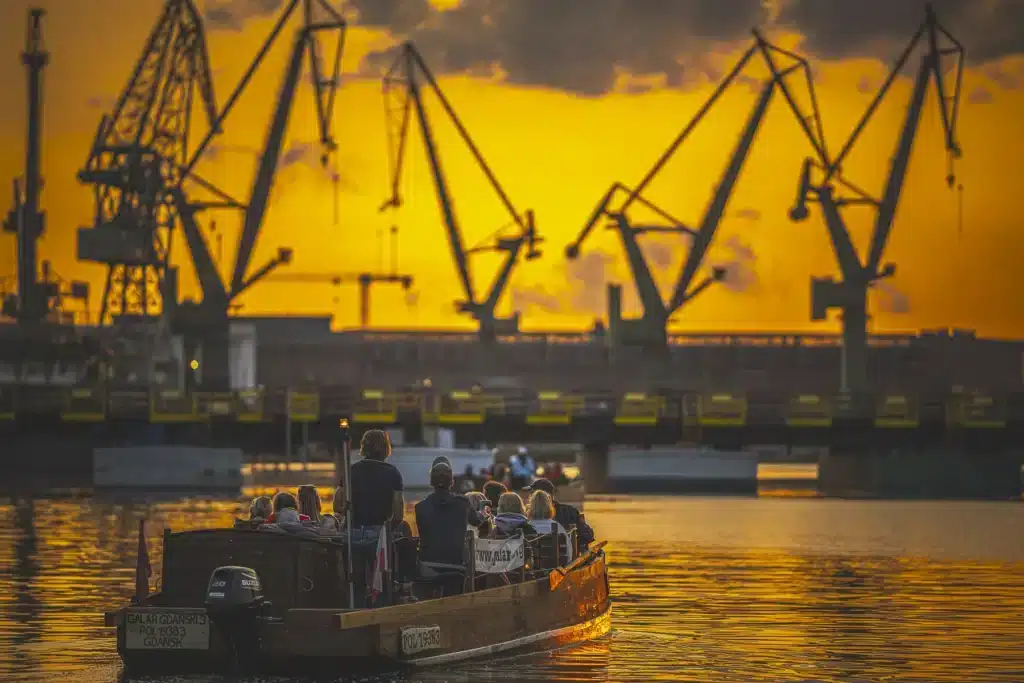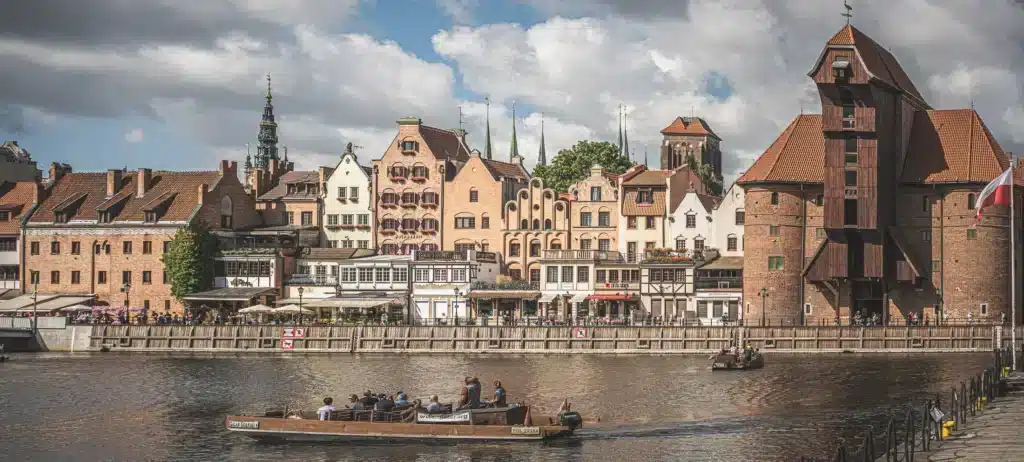



Sailing along the Motława near Wartka Street, it is hard to imagine the scale of the structure that once occupied this site. Gdańsk’s Teutonic Castle disappeared from the city’s skyline before the advent of photography. All that remains are fragments of the buildings, traces in the ground and the name Zamczysko.
A stronghold on the site of a former stronghold
After the capture of Gdańsk in 1308, the Teutonic Knights initially made use of the earlier ducal stronghold. Construction of the brick castle began in the 1330s, most likely in 1338. The new commander’s residence became the centre of the Order’s administration and a control point for this part of the city.
The stronghold’s grounds covered the area around today’s Rycerska, Karpia, Wartka and Sukiennicza streets. The river and the moats aided in its defence. However, its location by the water also had practical significance: the castle remained close to supply routes and the busy port.
What lay within the walls?
The most important part of the complex was the High Castle with its inner courtyard. Its wings housed, amongst other things, a chapel, living quarters, a dining hall, an armoury and food stores. It served as the seat of the monastic community and its officials, not merely a military stronghold.
When telling the story of the castle, it is easy to focus on the towers and walls. However, it is worth remembering the day-to-day logistics of such a place: preparing meals, storing goods, carrying out repairs and looking after visitors. The stronghold needed a constant connection with the city surrounding it.
Why did the people of Gdańsk demolish the castle?
In February 1454, at the start of the Thirteen Years’ War, the garrison surrendered the castle to the people of Gdańsk without a fight. The main building was quickly demolished. The disappearance of the Order’s headquarters marked a significant change in the city’s landscape, as Gdańsk rejected the authority of the Teutonic Knights.
Materials from the demolition were reused, and the moats were eventually filled in. The castle grounds were put to new uses. That is why searching for the castle in today’s Gdańsk is like reading successive layers of history: a small fragment of a wall may come from a completely different world to the buildings surrounding it.
The wall, the tower and caution regarding old engravings
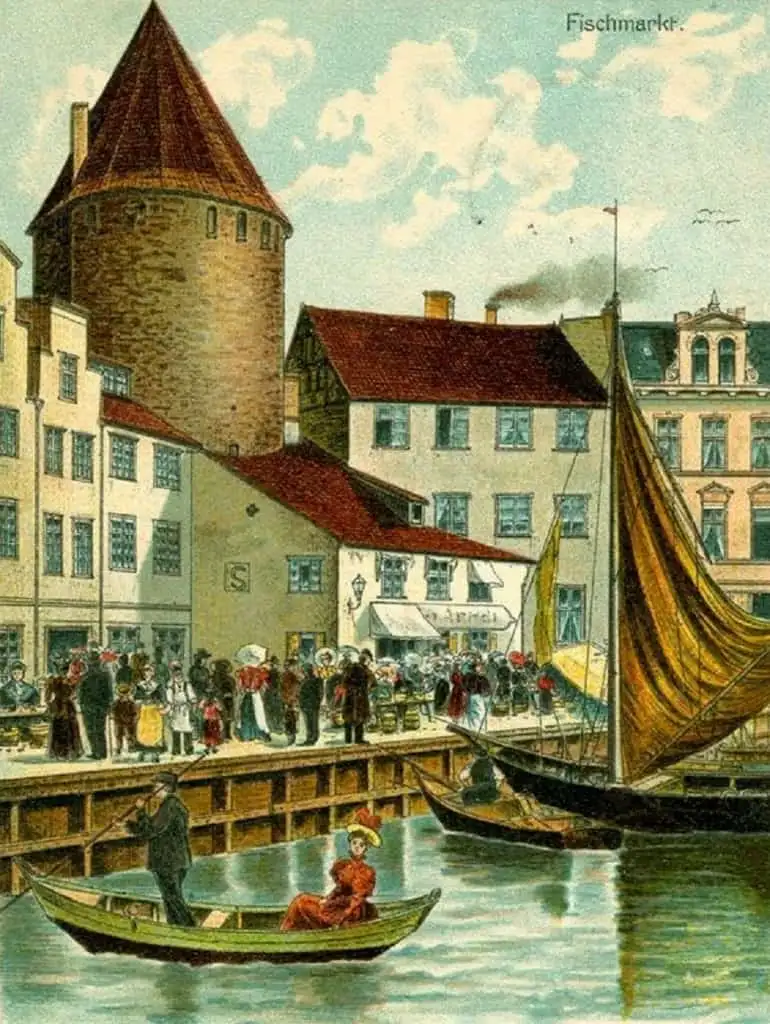
Along the Wartka River, remnants of the castle walls and a rebuilt tower have survived. The neighbouring Swan Tower has a more complex history: it stands on the site of the Teutonic Knights’ Fishermen’s Tower, but its form is associated with later urban redevelopment. It should not be regarded as an unaltered tower of the Order’s stronghold.
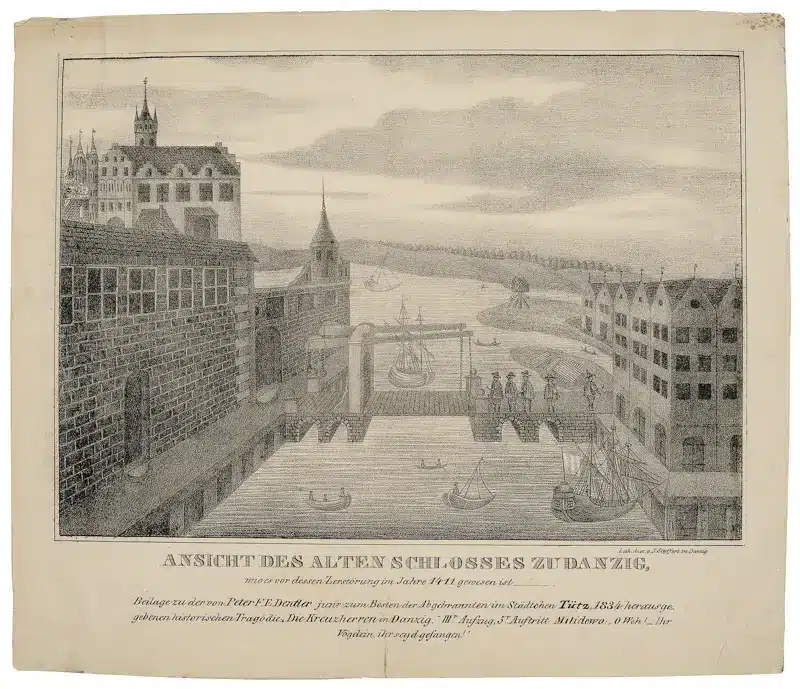
Jan Seyffert’s engraving from 1834 was created several centuries after the castle’s demolition. It depicts an imagined version of its appearance, rather than a view recorded by an eyewitness. Such illustrations form part of the history of the castle’s memory; its actual form is studied on the basis of documents, relics and archaeological evidence.
Another chapter in the history of this area began in the 19th century, when the Royal Navigation School was established on the Motława. We describe its history in a separate post.