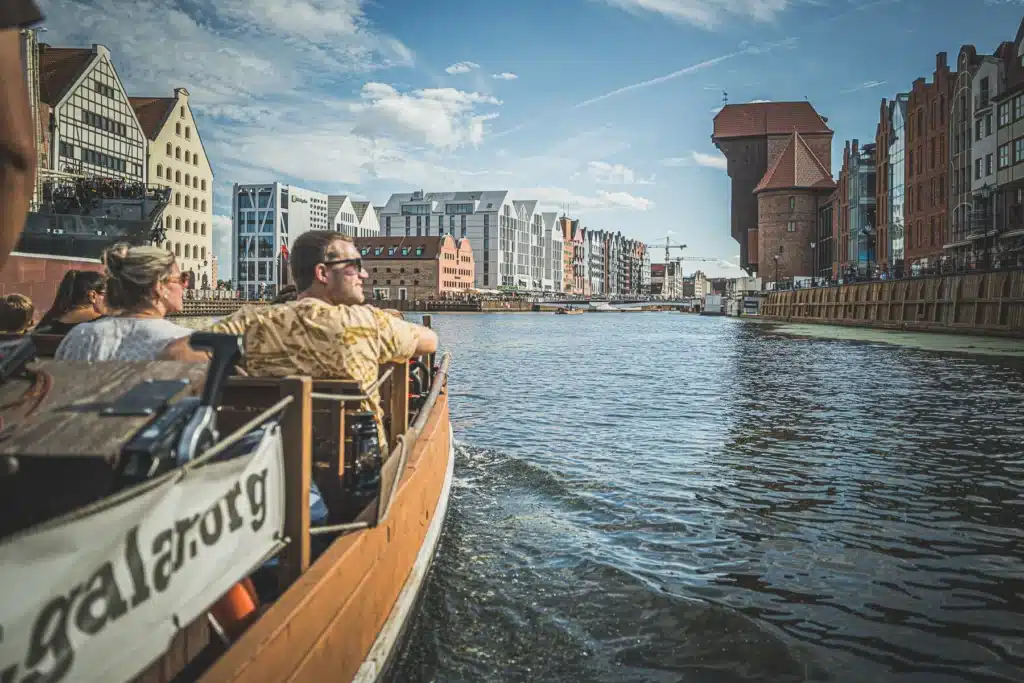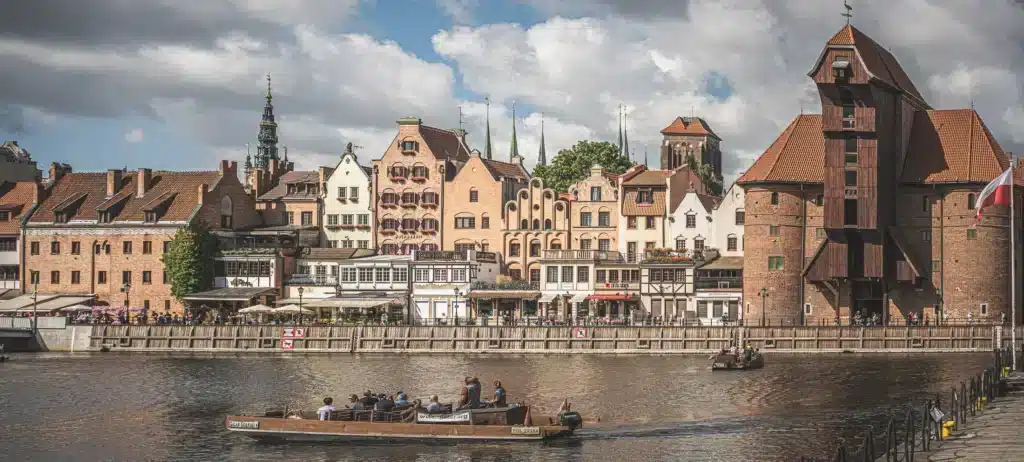


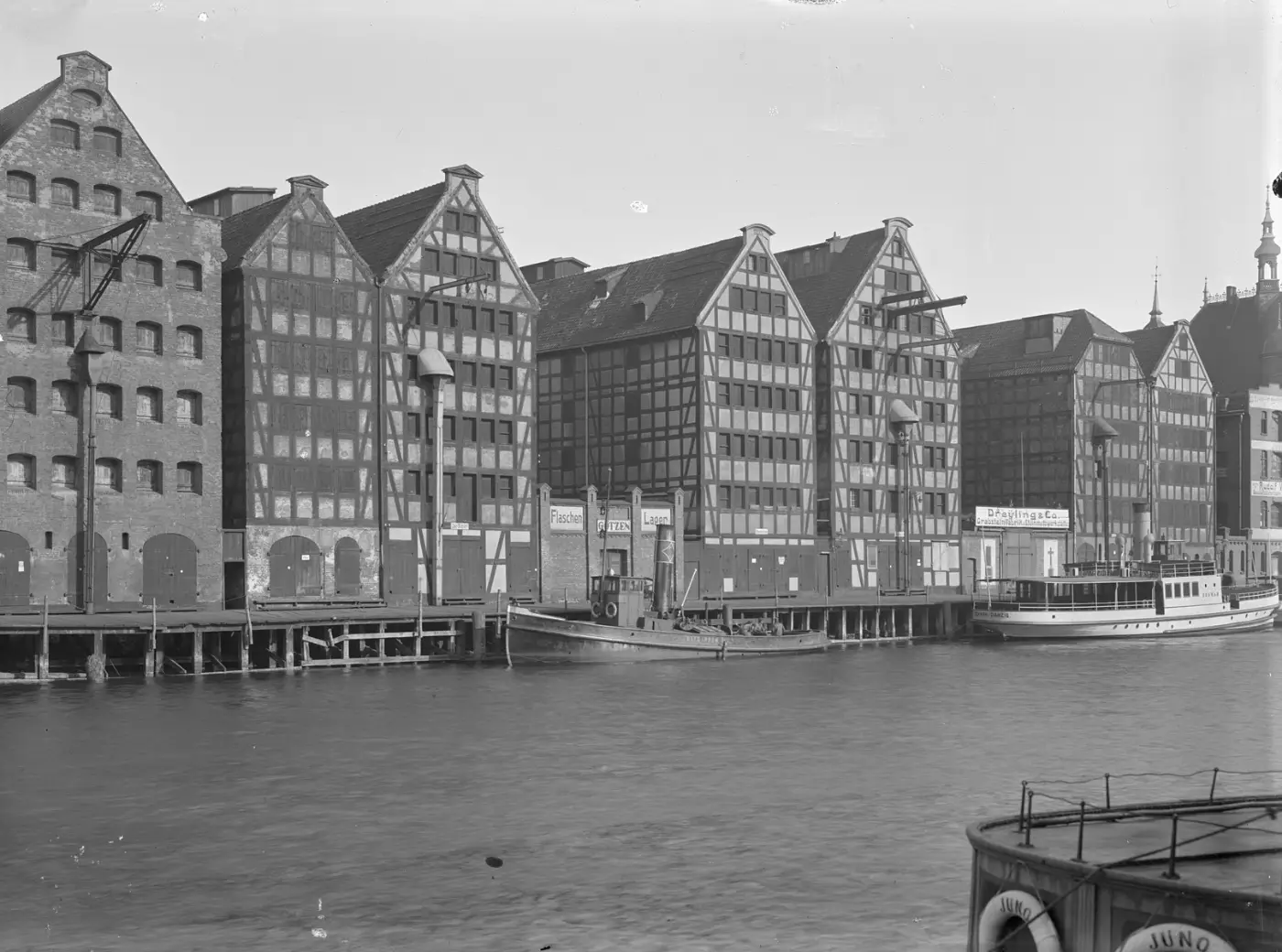

From Długie Pobrzeże, you can see, on the other side of the Motława, a place that for centuries served primarily as a workplace. Vessels laden with goods moored at the quays, and behind them stood rows of warehouses. Granary Island was the port’s hinterland and one of the most important places in merchant Gdańsk.
Granaries older than the island
The name aptly describes the area’s former function, but it holds a small surprise: the granaries existed here before the island did. It was only the digging of the Nowa Motława in 1576 that separated the area from the eastern bank. On the western side, the old riverbed remained, facing the Main Town.
By the 16th century, hundreds of granaries already stood here. They mainly stored grain transported by river from the heart of the Polish-Lithuanian Commonwealth, but also hops, flax, hemp, honey and other goods. The river connected producers with the port, from where cargo could be shipped onward by sea.
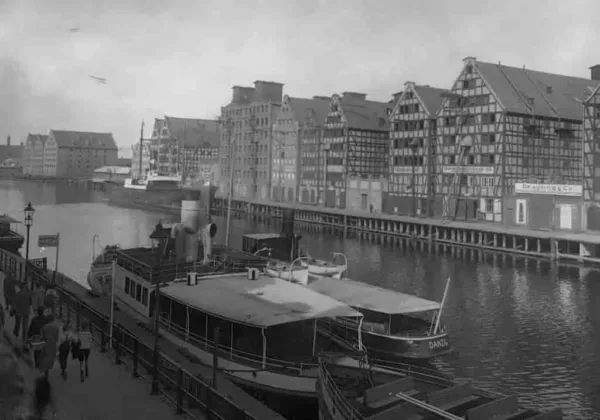
Bridges raised at night
The stockpiled goods were of great value, so the islands were closely guarded. At night, the bridges were raised, restricting access to the warehouses. Dogs, let loose after dark, also helped with security. The quay, bustling with people and cargo during the day, became a closed and guarded area in the evening.
Theft was not the only threat. Goods and buildings were destroyed by fires and floods. The guidebook *Galarem Po Gdańsku* recalls the great flood of 1540 and the fire started in 1516 by members of the Mattern gang. The storage of port supplies therefore required both efficient organisation and constant protection.
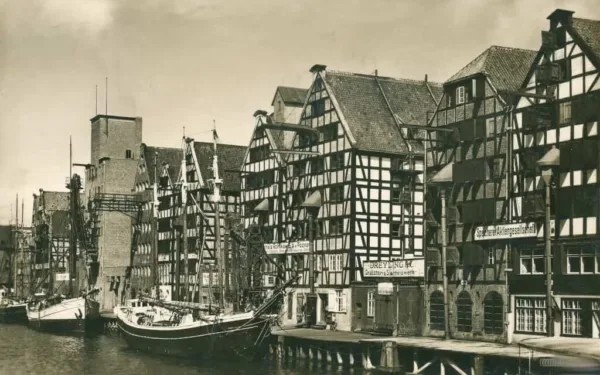
Each granary had its own name
White Steed, Red Lion, Noah’s Ark, Woli Łeb or Skull — the old names of the granaries can be even more surprising than street names. They helped to distinguish individual buildings amidst the dense cluster of warehouses. Hundreds of them were used over the centuries.
Thanks to these names, the history of trade ceases to be merely a tale of quantities of grain and numbers of ships. Individual warehouses take on their own identity, and it becomes easier to imagine the old port as a specific place where people found their way to their own warehouse every day.
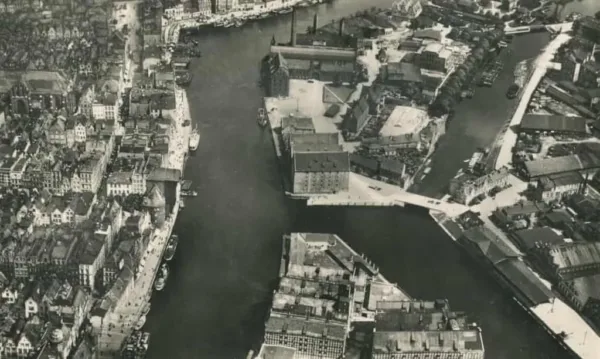
From warehouses to the new part of the city
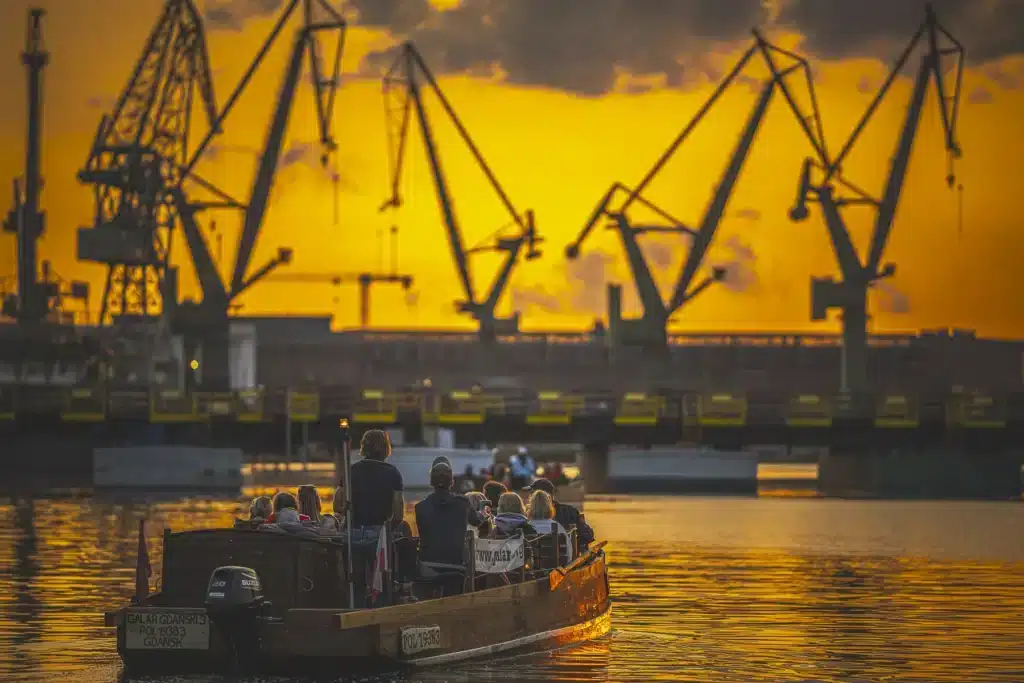
In the 19th century, water transport was supplemented by the railway, increasing the capacity to serve the warehouses. Archival photographs from the early decades of the 20th century show that the island still retained its port character. The year 1945 proved to be a catastrophe, when a significant part of the buildings was destroyed.
Post-war reconstruction and subsequent developments gradually transformed the function of this place. Today’s island is no longer characterised by the vast ruins depicted in older guidebooks. The historic granaries and modern buildings form another layer of its history.
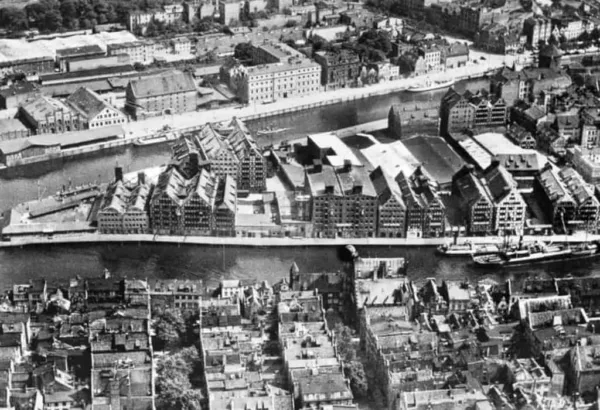
The island’s connection with the water remains the most evident. Looking at it from the Motława, one can trace the course of the quays and compare today’s panorama with old photographs. It is precisely from the river side that one can best see why the warehouses were built here.