

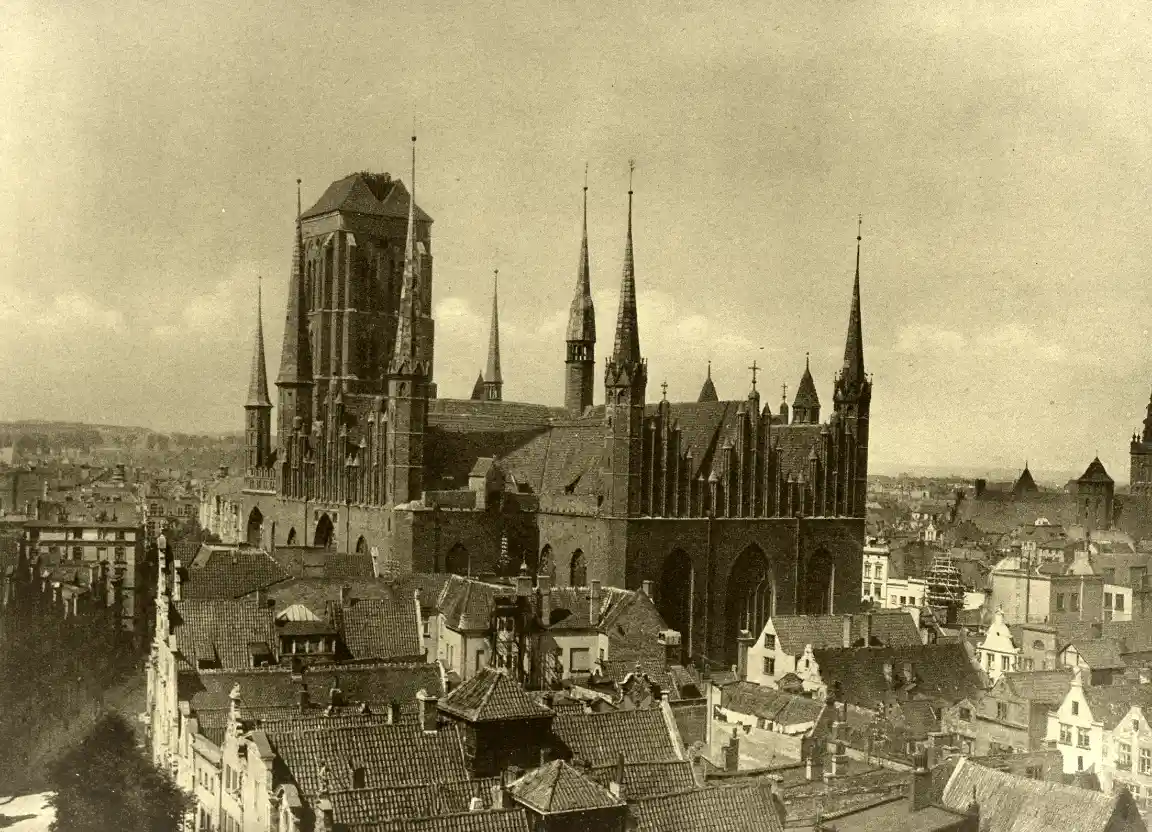

The massive structure of St Mary’s Church stands out amongst the rooftops of Gdańsk. Over the centuries, it has become steeped in tales of extraordinary events, human fear and courage. One such tale explains how the sound of the church bells was said to have saved the inhabitants from the plague.
This legend is recounted in the guidebook *Galarem Po Gdańsku*. We come to know its heroes and miraculous events as part of the city’s storytelling tradition, rather than as a documented account of the epidemic.
Master Damian arrives in Gdańsk
According to the tale, the plague struck the city. The distraught inhabitants decided to bring in a man who was said to be able to remedy the disaster. They sent a ship to fetch a Venetian scholar, astrologer and exorcist — Master Damian.
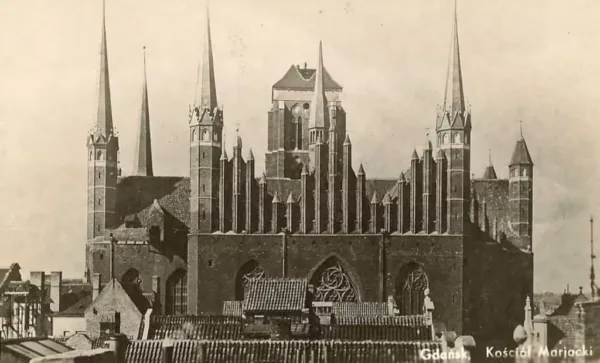
When the stranger arrived in Gdańsk, he concluded that the source of the calamity was the devil, who had taken up residence in the city. He announced that the devil could be driven out by the combined ringing of the bells of St Mary’s Church. There were six bells hanging in the tower. However, a seventh voice was still needed.
A small bell and a great task
The missing bell was in St John’s Church. It had to be brought to St Mary’s Tower and its sound added to the ringing of the other bells. According to the legend, only a sinless person could carry out this task. The choice fell on a boy named Chrystian.
The child took the bell from St John’s Church and set off. Before he reached his destination, he encountered the devil, who tried to thwart his mission. The fate of the entire city now depended on whether the young messenger would manage to complete his task.
Seven voices against the plague
Then the great bells in the tower began to ring. Chrystian rang his little bell, joining in with their sound. A storm broke over Gdańsk, and a bolt of lightning struck the church tower.
And so, according to legend, the devil was driven out and the plague abated. However, this salvation came at a price: Master Damian paid for the battle with his life. The tale ends with the city’s salvation and the memory of the man who came to its aid.
A church whose history spans generations
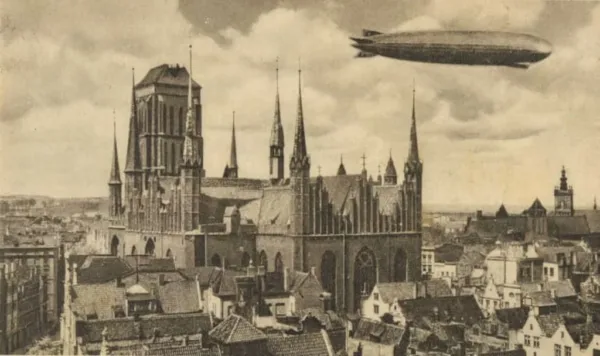
The actual history of the church is just as extensive, though we learn of it from other sources. Construction of the present church began in 1343, and the completion of the vaults in 1502 marked the end of a process that had lasted 159 years. Successive generations of residents watched as its mighty silhouette rose above the rooftops.
The legend centres this vast space around a single small object. Six enormous bells need the help of an inconspicuous little bell, and the whole city needs the courage of a child. It is precisely this image that remains in the memory when, having heard the story, one looks up at St Mary’s Tower.